
Gravenstein Season and Why Cider Starts at the Source
If you came to Sonoma for wine and somebody mentioned cider, you’re probably wondering what the fuss is about. Sonoma cider tasting makes a lot more sense once you know the apple behind it. The Gravenstein is Sonoma’s heirloom apple, grown around Sebastopol, and it’s one of the earliest North American apples to reach market. Around here it’s basically the starting gun for harvest season.
Here’s the catch, and it’s why cider is worth chasing in person. Gravensteins have soft skins and don’t travel well, so the best place to taste them is at the source, according to 7×7’s guide to Sonoma County apple season. You won’t find that same fruit sitting happily in a grocery store halfway across the country. That fragility is exactly what makes a local glass of Gravenstein cider feel like something you can only get here.
Apples are also a bigger deal in Sonoma than most visitors realize. According to Edible Marin & Wine Country, local farmers still grow over 2,000 acres of apples, around 150 varieties. The article is about a year old, so take the numbers as a solid ballpark rather than a fresh survey. Still, 150 varieties is a lot of cider potential, and it tells you the county’s farming story stretches well beyond grapes.
Timing matters. Gravenstein season runs late summer, and that’s when orchards, farm stands and festivals are at their liveliest. You can find cider outside that window, but the fresh-from-the-tree energy is a summer thing. If you’re building a trip around apples, aim for August, and check around before you lock in a specific weekend.
Where to Taste Cider in Sonoma County
Here’s the honest truth: cider tasting in Sonoma County is a smaller scene than wine tasting, and it’s spread out. There’s no tidy row of tasting rooms to hop between. That’s part of the charm, but it also means a little homework pays off.
Start with Sonoma County Tourism’s cider houses page, which covers where to taste cider locally. Edible Marin & Wine Country also put together a local cider trail map that shows how the producers sit geographically. That map is a year or so old, so confirm any stop is still pouring before you drive out.
A few names come up again and again. Horse & Plow in Sebastopol makes a 100% Sonoma County Gravenstein cider, which is about as on-theme as it gets for this region. Ace California Cider has a pub that a dated 7×7 listing showed as open Fridays from 1 to 5 p.m. But Ace’s parent company, Vintage Wine Estates, filed for Chapter 11 in July 2024, according to Wikipedia’s Ace Cider entry. So before you plan a stop there, check that the pub is still operating. I’d treat that listing as a lead, not a promise.
Beyond the named cideries, think seasonally. The Gravenstein Apple Fair, held each August, runs a Craft Cider Tent, and its cider page says the ciders come from apples grown within 100 miles of Ragle Ranch Park. It’s a one-stop way to sample several makers in a single afternoon.
If you’d rather fold cider into a wine-focused day, our local wine pages make a good companion for planning the rest of the itinerary, like this rundown of Sonoma’s best wineries to visit.
Prices, ABV and Whether You Need a Booking
Let’s tackle the practical stuff, because it’s where most people get stuck. I don’t have reliable, current cider tasting fees or reservation rules for specific cideries, and I’d rather say so than invent numbers. Prices and booking policies change, and cider spots are often small operations with limited hours.
What I can tell you is what to expect from the drink itself. Craft ciders generally run about 6 to 9 percent ABV, per Sonoma County Tourism. That puts them in the same neighborhood as a strong beer and a touch below many table wines. It sounds gentle, but a flight of several pours adds up fast, especially if you’re also doing wine that day.
On booking, here’s a sensible rule of thumb. Wine country has been loosening up, with many producers moving away from strict reservations-only policies and welcoming walk-ins, but cider houses are a different animal. Hours can be short, some are open only a few afternoons a week, and a place may be primarily a pub or production space rather than a polished tasting room. A quick call or a peek at the venue’s own website beats driving out to a locked door.
A few habits help:
- Check hours the same week you go, not just when you plan the trip.
- Ask whether tastings are by the flight, by the glass, or free with a purchase.
- Confirm the day if you’re counting on a particular pub, since Ace’s listing showed Friday afternoons only.
- If you’ve got a dog along, ask first. Plenty of Sonoma venues welcome pups, and our guide to dog-friendly Sonoma wineries is a good starting point for the wine side, but I can’t vouch for cideries without checking.
Comparing Your Options: Apple Fair, Tasting Rooms and Orchards
Not every cider experience looks the same, so match the format to your mood.
The Gravenstein Apple Fair is the party option. It happens each August, it’s festive, and the Craft Cider Tent lets you compare ciders from several makers without driving between locations. If you want variety in one sitting and don’t mind a crowd, this is your move. The tradeoff is that it only happens once a year, so you have to plan around it.
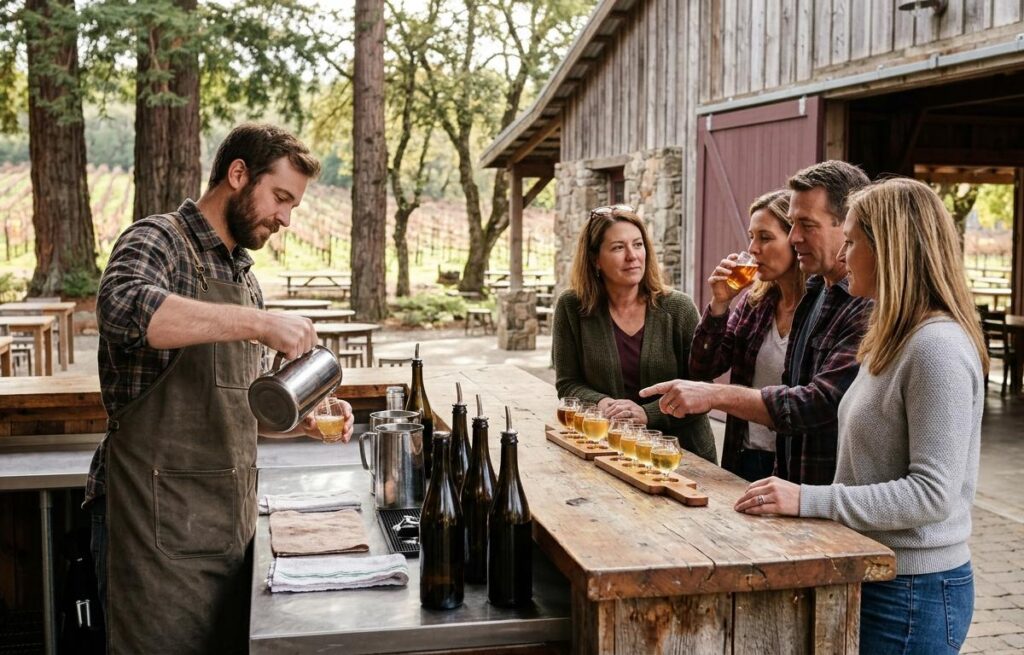
Tasting rooms and cider pubs are the steadier choice. A place like Horse & Plow gives you a focused look at a Gravenstein-forward cider in a more relaxed setting. You’ll typically get a quieter pour and a chance to chat with whoever’s behind the counter. The tradeoff is narrower hours, and the details above (fees, booking) are on you to confirm.
Orchards and farm stands are the hands-on option. This is where the "taste at the source" idea really shines, since you can see the trees and grab fruit that wouldn’t survive a long shipping trip. The 7×7 guide frames apple season as a mix of picking, pie and cider, which is a good mental model for an orchard day. Fair warning: most wine content skips this entirely, so you’ll need to dig a bit for current orchard hours.
A quick way to choose: go to the fair for breadth and a lively scene, pick a tasting room for depth and calm, and pick an orchard for the farm experience. You can absolutely do two of the three in one trip, especially in late summer.
If you’re still deciding between regions overall, our take on Sonoma versus Napa might help frame the bigger picture.
Planning a Cider Day With a Driver-Led Tour
This is where a local driver earns their keep. Cider spots are scattered, hours are quirky, and you’re probably mixing in wine. Throw in 6 to 9 percent ABV across a few flights, and suddenly you want somebody else handling the road. That’s the whole reason we do what we do.
A driver-led day lets you stack stops without the map-checking and the designated-driver arguments. We can build an itinerary around a Sebastopol cider stop, a few wineries, and a stretch of scenic back roads, and keep the pacing relaxed. It’s especially nice for groups, whether that’s a birthday crew or a bachelorette outing that wants something different from the usual tasting-room circuit. If you’re curious how this works, our wine tasting tours page walks through costs and picks, and you can see everything we offer on the services page.
I’ll be upfront about one thing: I don’t have verified pricing or group-size limits for cider-specific tours, so we’d sort out the details together when you reach out. What I can promise is a flexible plan. Tell us you want a Sonoma cider tasting alongside your wine stops, and we’ll confirm which cider venues are actually open on your date before we ever roll out.
A few tips to make the day smoother:
- Pick a season. August is the sweet spot for apple energy, especially around the fair.
- Anchor the day with one confirmed cider stop, then build your wine visits around it.
- Eat something substantial. Cider and wine hit harder on an empty stomach.
- Keep the schedule loose, because small cider operations can surprise you with limited hours.
Sonoma County is full of small, delicious detours, and cider is one of the best. Let someone else drive, sip a Gravenstein pour, and enjoy the ride.